

Crypto Crashes the Party 💥
Plus: Plouffe Daddy

In this week’s edition of The Context, digital assets take a nosedive, ETH ETFs have an exceptional day, and crypto hits the campaign trail.

[Number Go…Down?📉]
Bitcoin’s value dropped from $65,000 to under $50,000 from August 1-5, with Ethereum and most other cryptocurrencies also suffering significant drops.
What Journalists Said 🧑💻:
To find a comparable crash, wrote Leo Schwartz (Fortune), you have to go to 2022 — when Terra and FTX were collapsing. The alleged culprits of this crash, which also triggered a selloff of stocks: a new jobs report showing slowed hiring and higher unemployment, as well as the Federal Reserve’s late-July decision to keep interest rates steady. 📈
That’s right — crypto was crashing at the same time as stocks were getting pummeled. “There was a time when people thought that crypto might be a new asset class that was uncorrelated to other assets, but that seems like mostly a mistake,” wrote Matt Levine (Bloomberg). “Crypto is a volatile infinite-duration asset; it goes up when risk appetite goes up or when interest rates go down, and down when risk appetite goes down or rates go up.”
“The weakening global economy, which was catalyzed further by the sudden crash of Japan’s stock market,” really hurt crypto traders, said Arijit Sarkar (Cointelegraph). They had over $1B liquidated in 24 hours on Monday, the overwhelming majority from long positions. In short: “Crypto traders anticipating a prolonged bull run lost their positions in the bloodbath.” 🩸🛁
PR Perspective 🔎:
Just when things were looking bullish for crypto, the specter of a possible recession emerged. While crypto and stocks have since recovered some of their losses, price volatility may not be over. Therefore, crypto firms can’t rely on bear or bull narratives because it’s hard to know which type of market will prevail. They must instead push “build” narratives and position their projects as products that people will want to use regardless of market conditions.
[Jump Ship or Buy the Dip?🤔]
There was a bright spot amid the digital asset darkness on Monday. Ethereum exchange-traded funds netted $49M in inflows, meaning more money was invested in the products than taken out.
What Journalists Said 🧑💻:
ETH investors were buying the proverbial dip, betting that Ether wouldn’t continue its downward price trajectory, reported Suvashree Ghosh & Sidhartha Shukla (Bloomberg). If the asset bounces back, they’ll be rewarded. But those gains “may be short-lived without a broad improvement in the macro-economic environment and an easing of tensions in the Middle East.”
Monday was actually a rare good day for Ether ETFs, noted Shaurya Malwa (CoinDesk). “Since they first went live for trading on July 23, the products have recorded net outflows of $460 million, indicating that long-term demand for ETH ETFs has yet to fully appear. For comparison, two weeks into their existence, Bitcoin ETFs already had net inflows above $1B.
Jump Crypto’s potential exit from crypto — following the report of a Commodities and Futures Trading Commission investigation into the firm’s trading activity — “could explain the subdued price action in ether following the launch” of spot ETFs, said Samyuktha Sriram (Unchained). Jump “is seemingly unwinding the majority of its positions” and has begun converting large sums of wrapped ETH and selling it on exchanges.
PR Perspective 🔎:
Ether ETFs make it easier for retail investors to get exposure to crypto. But while equities might go down on any given Monday, crypto’s price movements can be much more dramatic. If you’re an asset manager promoting a brand new ETH ETF, you’re probably going to be talking more about the bright future you see for Ethereum rather than get caught up explaining why it’s down today.
[The Plouffe Stuff?🐡]
David Plouffe, who managed Barack Obama’s 2008 presidential campaign and served as his senior advisor before joining the Binance Global Advisory Board and advising Alchemy Pay, is joining Vice President Kamala Harris’s campaign as a senior advisor.
What People Said 🧑💻:
As a former advisor to Binance and Alchemy, Plouffe has “deep crypto ties,” said Sarah Wynn (The Block). He’s on record with CoinDesk discussing the need for crypto-specific regulations that ensure “transparency without basically strangling the industry.” This comes as the VP’s team began reaching out to the industry, hosting a crypto roundtable with several execs.
Harris also onboarded Brian Nelson as an advisor, wrote Niamh Rowe (Fortune). As the US Treasury’s Undersecretary for Terrorism and Financial Intelligence, Nelson successfully sued Binance and its affilitates for money laundering and sanctions violations. That said, several crypto industry insiders told Fortune that Nelson is concerned about illicit finance but quite “open” to crypto.
“The appointments hint at Harris' willingness to engage with crypto industry participants as questions linger regarding her stance against the asset class,” said Matthew Sainsbury (Decrypt). At the moment, the Democratic Party nominee’s views on crypto are “unclear.”
PR Perspective 🔎:
After releasing an NFT collection and appearing at Bitcoin 2024, former President Donald Trump is looking to lock up single-issue crypto voters in a tight election. If Harris, who officially became the Democratic nominee this week after replacing President Joe Biden, wants a shot at those voters, she needs to formulate and publicly amplify her stances on crypto regulations. And soon.
[Tweet Of The Week]
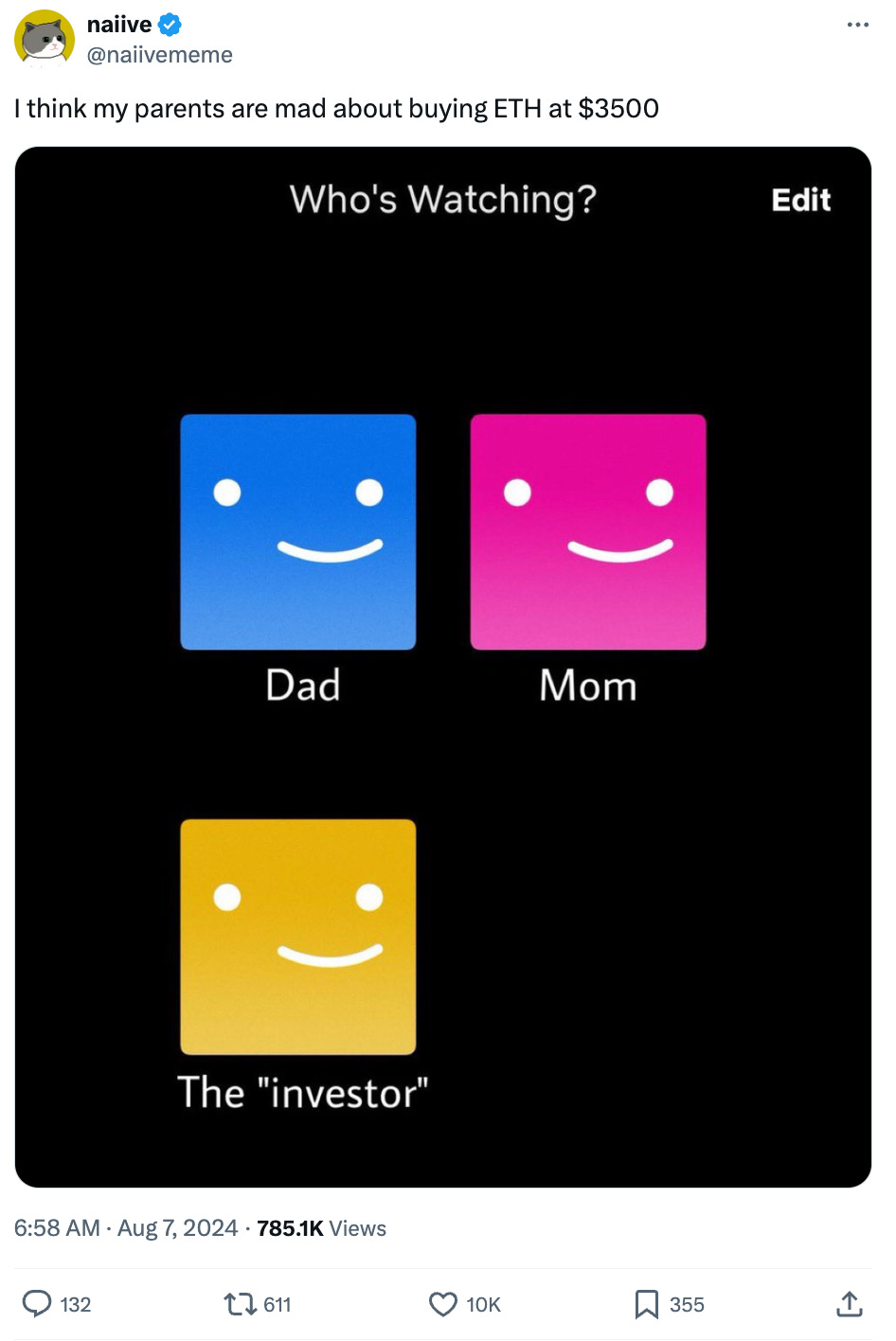
Credit: @naiivememe
[DeFi Definitions]
A segment exploring one particular aspect of DeFi. View previous entries here.
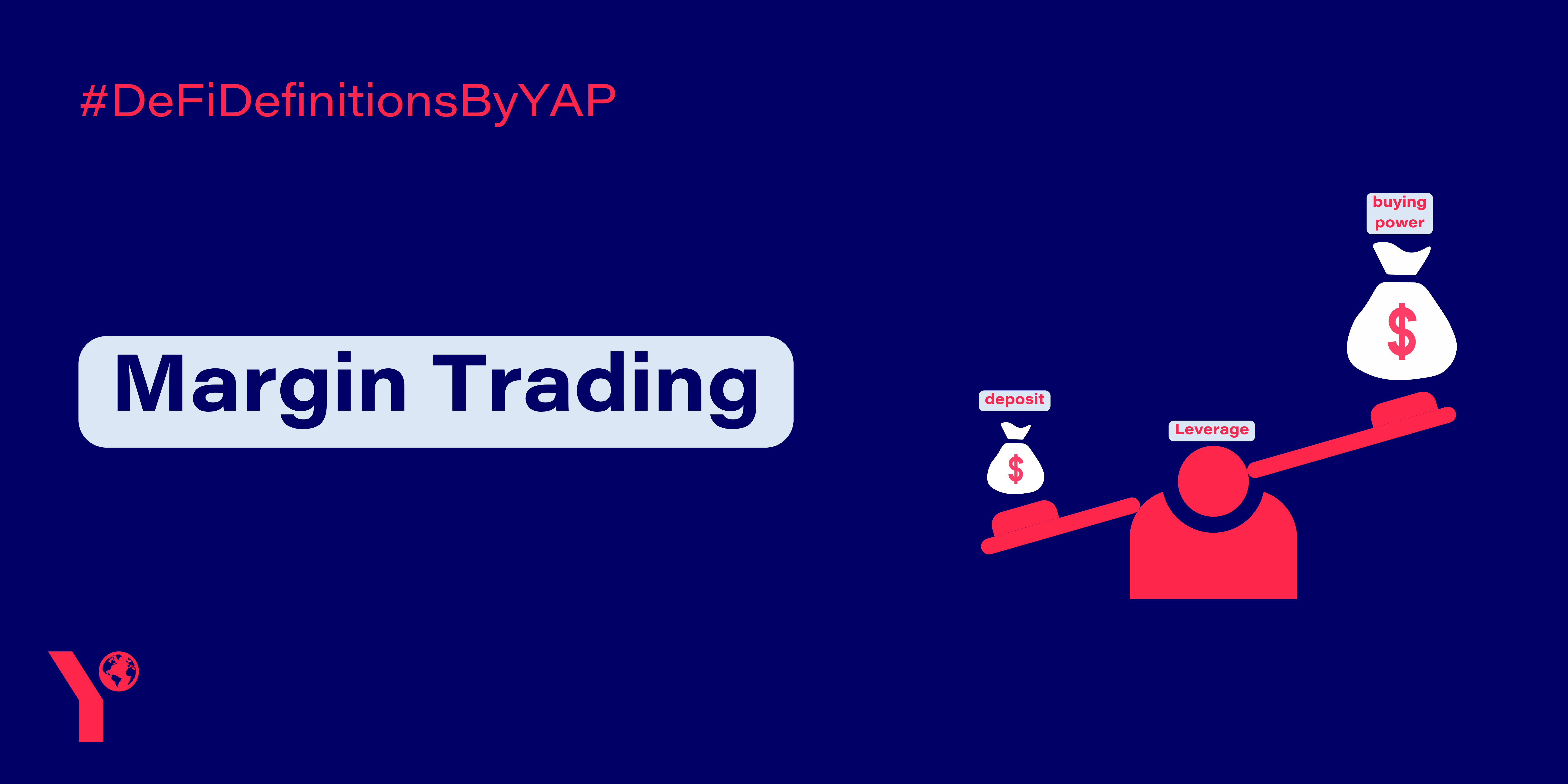
This week: ‘Margin Trading’ by Vashundara Singh.
Margin trading involves borrowing funds from a broker or exchange to trade assets, aiming to increase both potential profits and losses. Investors open a margin account and must meet a minimum margin requirement, typically a percentage of the total trade value, to engage in margin trading.
Additional leverage allows investors to control larger positions than their initial investment would permit. However, if the value of the assets falls below a certain threshold, known as the maintenance margin requirement, the broker may issue a margin call, requiring the investor to deposit additional funds or risk liquidation of their positions. Therefore, Margin Trading offers the potential for higher returns but carries greater risks due to leverage.
Investors should carefully assess their risk tolerance and understand the mechanics of margin trading before participating. Regulatory oversight helps protect investors and maintain market stability in margin trading.
The usual disclaimer: This newsletter collates the main themes and headlines of the week in DeFi/crypto/metaverse/Web3/NFT land and tries to provide unbiased context. It's aimed at anyone who wants to keep an eye on the space. It's put together by a team at YAP and doesn't contain any promotion of our clients (if one is mentioned, we'll flag that).
The team: Founder Samantha Yap and consulting editor Jeff Benson, Andrew Wickerson, Ewan Brewster, Emma Murphy and Shajar Qureshi. Your feedback is, as always, welcome. Ping us at thecontext@yapglobal.com. Old newsletters can be found here.
This newsletter is prepared by YAP Global, an international P.R. Consultancy focusing on helping cryptocurrency, Decentralised Finance (DeFi) and brands through impactful storytelling. Find out more about us here.